

Considering tiling your bathroom floor but not sure how to begin? Screeding your bathroom floor is the most critical and first phase of preparing a lasting, smooth and perfect finish for wall tiles. If you opt for the DIY route, we will show how to mix and apply your screed in order to achieve that excellent tile finish with this post so you can not only install that perfect bathroom floor or shower area.
Let’s show you how to screed your bathroom floor the right way and save yourself time, money and maybe even having ripped it all up in frustration if you’re not shown what steps are involved.
Step-by-Step Guide to Preparing Your Bathroom Floor for Screeding
Before you start mixing or applying anything, it’s essential to prepare a floor in readiness for the screed. Cleaning and assessing the surface ensures better bonding and a longer-lasting floor.
Start by cleaning the area thoroughly. Remove dust, loose particles, and any moisture. Use a bonding agent if the cement screed is being laid over a concrete base. Next, use a spirit level to check the floor’s height and slope, especially around the drain. Proper drainage is critical, especially in wet areas like a shower, to prevent water damage or pooling.
Fix any major cracks or imperfections before starting. The structure of the floor must be stable and dry for the screed to stick and cure properly.
Choosing the Right Screed Mix for Your Bathroom Floor
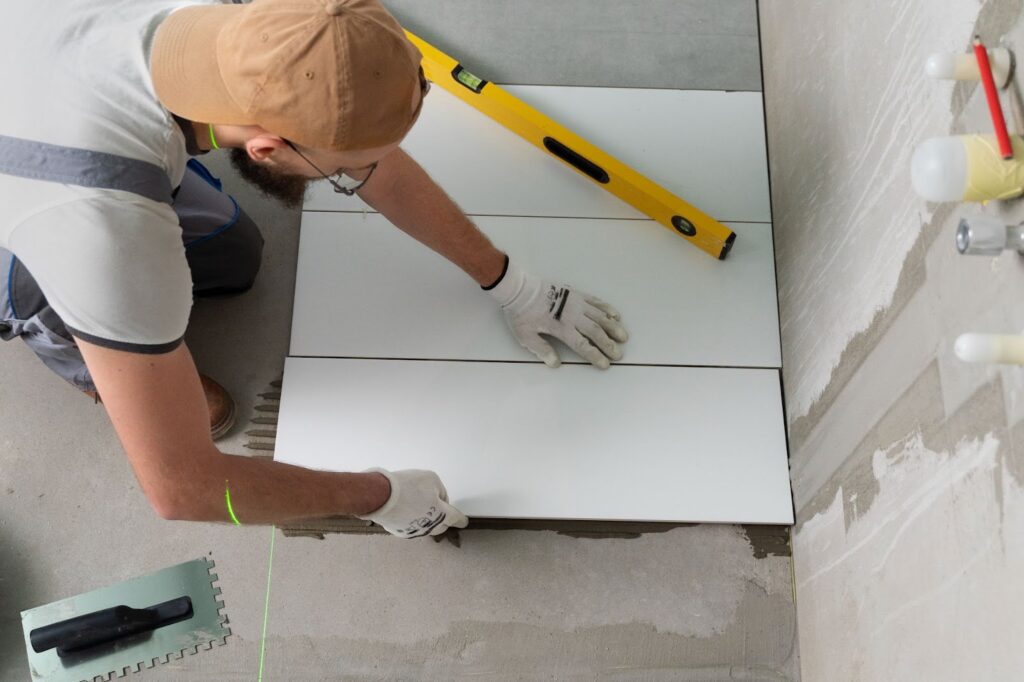
The quality of your screed mix directly affects the durability and finish of your tile bed. For most bathroom installations, an easy-mix traditional floor screed is ideal—combining sharp sand, cement, and water in just the right ratio.
A standard ratio is 4:1 sand to cement, mixed gradually with water until you achieve a smooth, slightly damp consistency. Avoid making the mix too wet, as it can affect drying time and result in cracks. Use a bucket or drill mixer to combine your ingredients evenly.
The screed must be thick enough to withstand everyday use—a minimum thickness of 40mm is recommended, but areas around the drain may require you to adjust the height to allow for a slope that promotes proper drainage.
How to Lay and Apply Screed Over a Bathroom Floor
Once your mix is ready, it’s time to apply and lay it onto the prepared surface. Divide your floor into manageable sections using timber battens as screed guides. Pour the mix and spread it using a float, starting from the furthest point and working back towards the door.
The float helps you achieve a smooth, even surface. Compact the screed well as you go to eliminate air pockets and ensure a stable foundation. Check your height with a spirit level, especially around the shower or wet zones.
Work section by section until the entire bathroom floor is covered. The goal is to create an even bed that provides a strong foundation for your tile adhesive. Drying and Curing: Ensuring a Strong Screed Foundation
Once the screed is laid, allow it to dry slowly and cure properly. This is an essential step for a strong and crack-free finish. Avoid rushing this part—premature tile laying can compromise the entire installation.
A standard screed takes about 24–48 hours to set and at least 7 days to fully cure. If possible, cover the floor with plastic sheeting to retain moisture and prevent rapid drying, especially in warmer conditions. This step also helps reduce movement in the screed as it hardens.
Avoid walking on the freshly screeded floor during this time. Allowing a full curing process gives you a solid, long-lasting foundation for your tiles.
Installing an Under-Tile Screed for Wet Areas Like Showers

Installing an under-tile screed is especially important in wet zones like the shower, where water exposure is constant. These areas require a slight slope towards the drain to maintain proper drainage and prevent moisture buildup under the tile.
Use a screed mix with slightly less water to allow better control over shaping the slope. The thickness should taper down to allow a gentle fall towards the drain. Use a straight edge and float to guide your angles.
Double-check your drainage before the screed sets. If it isn’t angled correctly, your entire project may be compromised. Take your time in this step—it’s essential for any functional bathroom.
Tips for a Smooth Finish Before Laying Tiles
A clean, level finish is key to a professional-looking tile job. After the screed has been allowed to dry, inspect the surface for bumps or dips. Use a hand float to smooth out any high spots, or sand gently if required.
The floor must be fully dry before applying tile adhesive. This ensures proper bonding and prevents tiles from shifting or lifting. Your bathroom floor should now be in perfect readiness for laying tiles.
Learning how to prepare and execute this process gives you better control over your tile outcome. Whether you’re doing this for the first time or refining your technique, a smooth screed is a must for a top-tier finish.
Hiring a Professional: What to Consider
While screeding a bathroom floor may seem like a manageable DIY task, the margin for error is slim. Mistakes in the mix, slope, or drying time can lead to uneven tiles, water issues, or costly rework.
If your project involves high-end tile materials like marble, onyx, or porcelain, or complex floor layouts with multiple drains, it’s worth considering a professional installer. An expert ensures the right screed thickness, fall angles, and surface prep—protecting your investment long-term.
Decore Tiling not only brings over 20 years of experience, but we also use advanced tiling systems and deliver exceptional screeding that lasts a lifetime.
Final Thoughts: Key Takeaways Before You Screed Your Bathroom Floor
Screeding might sound like a simple process, but doing it right is the backbone of any quality bathroom tile job. Here’s what to remember:
- Prepare your floor carefully—clean, level, and moisture-free
- Use a quality screed mix like easy mix traditional floor screed for best results
- Always maintain the correct thickness and allow for proper drainage
- Allow the screed to fully dry and cure before tiling
- Don’t rush—patience ensures a smooth, stable foundation
If you want the job done right the first time, Decore Tiling is here to help. With decades of hands-on experience, a passion for perfection, and a commitment to quality materials and methods, we’ll handle your tiling project from start to finish—with no shortcuts and no stress.
Contact us today to get a quote or expert advice on your upcoming bathroom renovation. Let us provide you with a floor that’s as beautiful as it is durable.