
Scrubbing bathroom tile does not have to be a dreaded chore. In reality, it’s possible to clean bathroom tile quite fast and with great results—leaving your space looking like new. Be it grout, soap scum, mould or general dirt you’re looking to get rid of, we will share the best ways to clean your bathroom tile and grout without having to invest in a lot of products with harsh chemicals.
In this post, we’ll explain how to clean bathroom wall and floor tiles in detail, including which products you should use (and avoid), the tools that will make the job more manageable, and tips for lifting even ground-in stains from grout lines or tile surfaces, as well as some general guidelines on frequency of cleaning. If you’re ready to make that bathroom sparkle again, this will be the only guide on cleaning bathroom tile you ever need.
Materials Needed for Cleaning Bathroom Tile and Grout
Before going into the cleaning process, it’s important to gather your tools. Using the right materials needed for cleaning will make the job easier and more effective.
Start with essentials like a sponge, toothbrush, spray bottle, mop, squeegee, and a non-abrasive cloth to wipe the tiles dry. For cleaners, keep it simple and eco-friendly. You’ll need white vinegar, baking soda, lemon juice, dish soap, and warm water. You can also add a specialised tile cleaner or grout cleaner to your arsenal for tough stains or deeply embedded grime.
Avoid using acidic or highly abrasive products, especially on natural stone or delicate surfaces, as they can erode the finish over time. A paste of baking soda and water is particularly effective for scrubbing grout without damaging surrounding tiles.
How Often to Clean Bathroom Tile and Grout
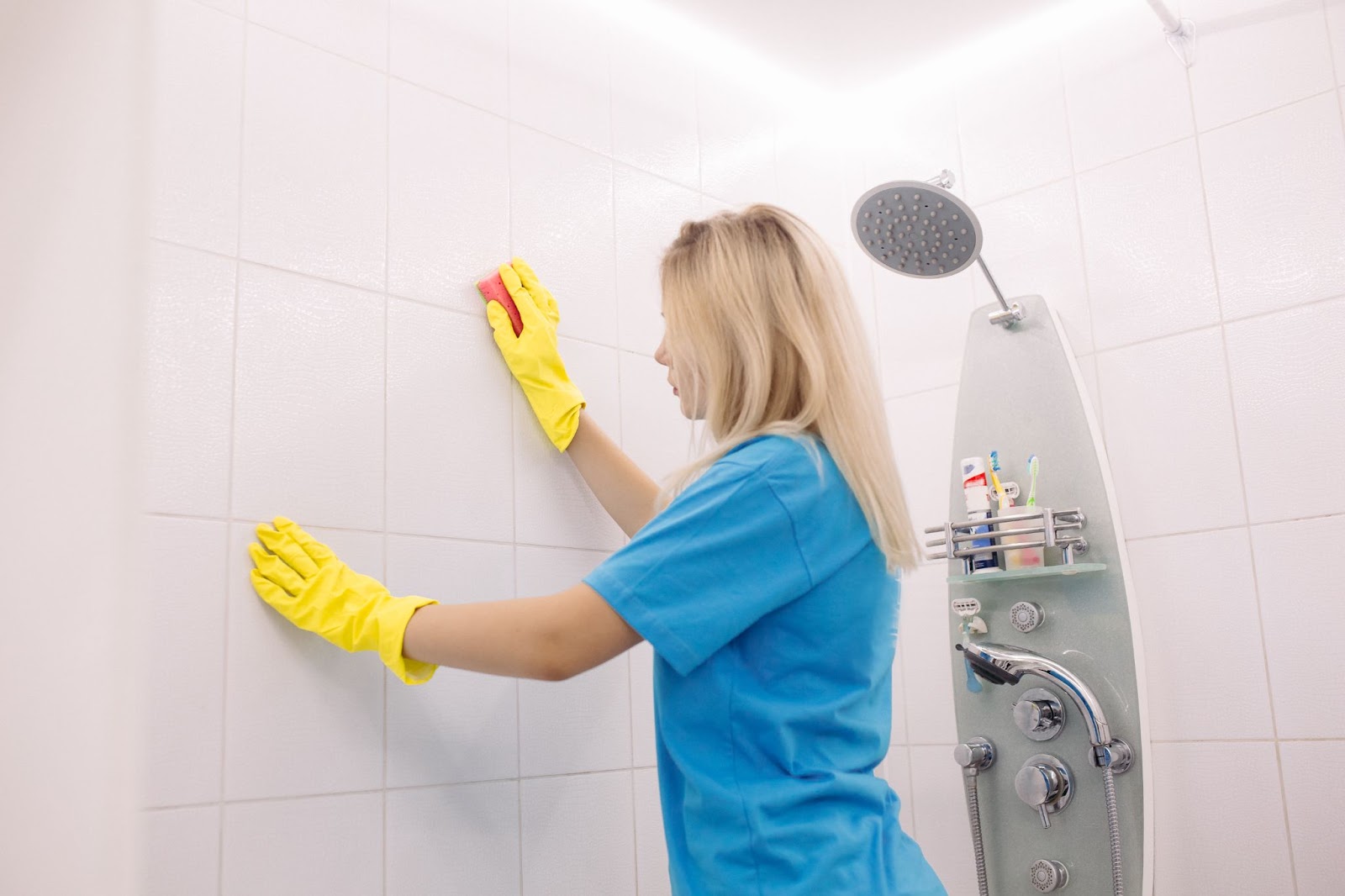
Knowing how often to clean your bathroom tile depends on usage and moisture levels. Shower walls, for instance, should be wiped down after every use with a squeegee or cloth to wipe away excess water. This helps reduce the amount of moisture and prevent mould and mildew buildup.
For a routine deep clean, aim to scrub and rinse your tile and grout once every one to two weeks. Floors should be cleaned with a mop and mild cleaning solution weekly, especially in high-traffic areas. Regular cleaning not only maintains the sparkle but also extends the life of your tiles and keeps your bathroom hygienic.
Best Cleaners and Solutions for Bathroom Tile
When it comes to effective bathroom tile cleaning, natural ingredients often work just as well—if not better—than store-bought products. A classic vinegar solution made by mixing equal parts white vinegar and warm water in a spray bottle can be sprayed directly onto the tiles and let sit for a few minutes. This breaks down soap scum, water spots, and light stains.
For stubborn stains and heavy grime, apply the paste of baking soda and water directly to the tile and grout, then spray with vinegar. The chemical reaction helps lift the dirt with minimal effort. Scrub with a toothbrush or a soft sponge, then rinse with warm water and wipe dry.
For those who prefer a citrusy cleaner, lemon juice mixed with a bit of dish soap is effective for cleaning and leaves a fresh scent. You can also combine vinegar and lemon juice for extra power on porcelain or ceramic tiles.
How to Scrub and Maintain Your Bathroom Wall Tiles
Wall tiles often get neglected, but they accumulate just as much grime and soap scum as floor tiles. Begin by spraying your vinegar or tile cleaner onto the tiles—especially around the shower area—let it sit for 5 to 10 minutes, then scrub with a brush in circular motions.
Use a squeegee daily to reduce buildup, especially after hot showers, which leave condensation. For hard-to-reach areas or mildew spots, a mixture of bleach and water may be needed—just remember to dilute and ventilate the room well.
To maintain that sparkling clean finish, follow up with a dry cloth to wipe down all surfaces. This reduces the chance of watermarks reappearing and keeps your tiles looking glossy and fresh.
How to Remove Stains and Mould from Tile and Grout
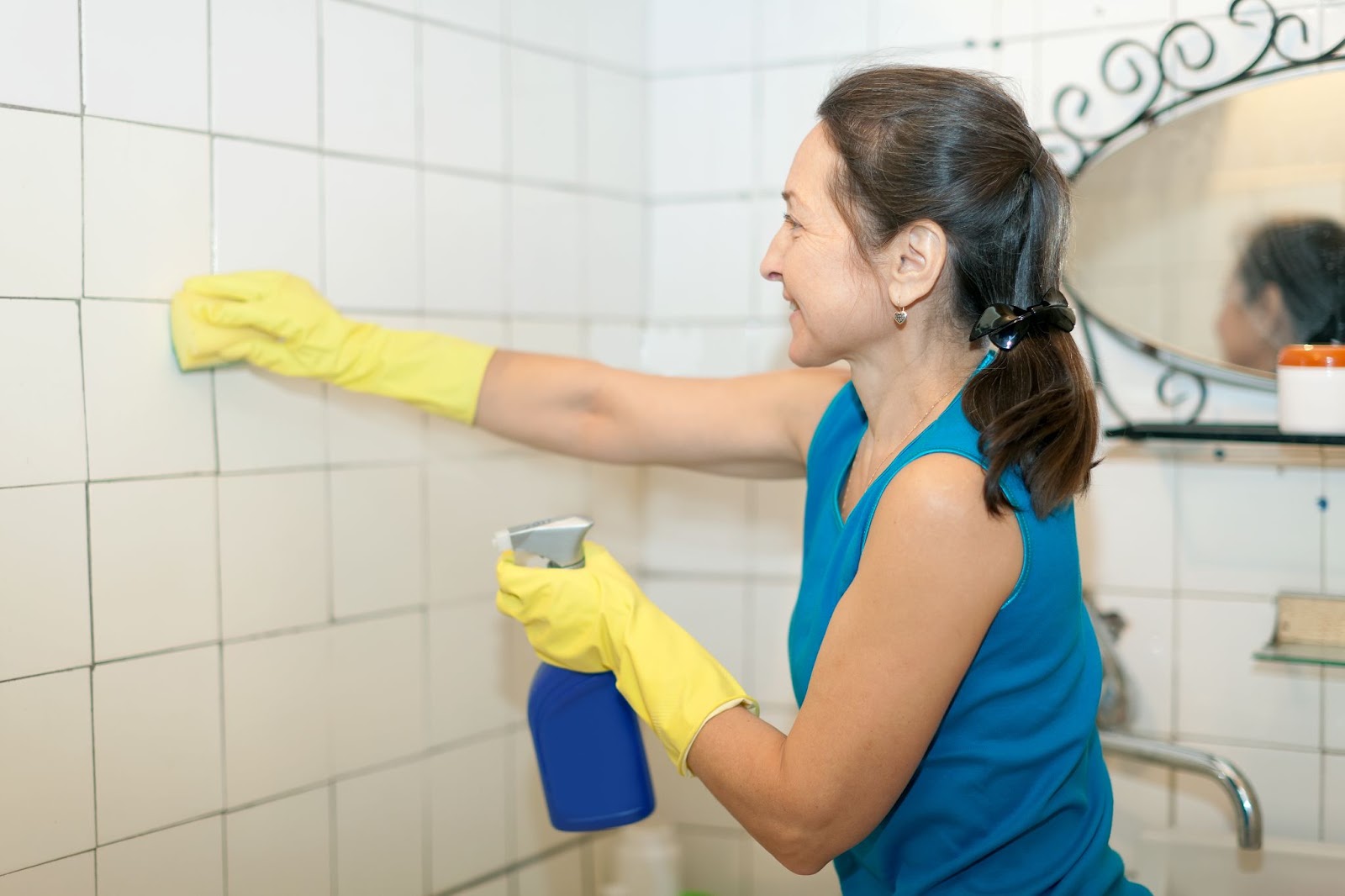
Removing stains and grime from tile and grout requires some patience and elbow grease. Start with a vinegar and baking soda combo to treat light stains, then scrub away dirt using a stiff-bristled brush or toothbrush. For persistent mould, use bleach diluted with warm water or a specialised mould and mildew remover.
Apply the mixture directly onto the affected grout, let it sit, and then scrub clean. For natural cleaning, lemon juice with baking soda works wonders, especially for porcelain tiles. If you’re dealing with hard water stains, vinegar is your best friend—spray it on, wait, then rinse thoroughly.
It’s important to clean and maintain these areas regularly to prevent the stains from becoming permanent. If you keep up with routine care, you’ll be able to remove stains with ease and keep your clean bathroom tiles in top condition.
Cleaning the Tile Floor: Step-by-Step
Your floor tiles deserve just as much attention as your shower walls. Sweep or vacuum first to remove loose dirt, then mop with a cleaning solution of vinegar, dish soap, and warm water. This mixture is useful for cleaning both ceramic and porcelain tiles.
If the floor tiles have a textured surface, scrub with a brush to get into the grooves. Rinse with clean water and wipe dry with a towel to avoid watermarks. Regularly maintained tiles are easy to clean and help with keeping your bathroom looking polished and tidy.
For high-traffic areas or common types of bathroom flooring, reapplying a tile cleaner or grout cleaner once a month can help preserve the finish and prevent wear.
Thinking about screeding? See our step by step guide on how to screed a bathroom floor.
Keeping Your Bathroom Tile and Grout Looking New
The key to cleaning and maintaining tile and grout is consistency. After deep cleaning, make a habit of rinsing and drying tiles after each shower, using a squeegee, and running a fan or dehumidifier to reduce moisture.
It’s also worth sealing your grout lines every few months. This helps prevent mould, grime, and stains from penetrating the surface. With the right habits, you can keep your clean bathroom tiles looking sharp and sanitary for years to come.
The right cleaner, a regular schedule, and a little daily attention are all it takes to extend the life of your tiles and ensure your bathroom always shines.
Conclusion: Bring the Sparkle Back to Your Tiles
Learning how to clean and maintain your bathroom tile isn’t just about making your space look good—it’s about ensuring hygiene, preventing damage, and extending the life of your surfaces. From grout to wall tiles and from everyday stains to deep-seated mould, the methods we’ve outlined are not only simple but also highly effective for cleaning.
Having read to this point, you must have decided to go with either vinegar and baking soda, lemon juice, or a trusted tile cleaner. But the secret lies in consistency and using the right way to clean for your tiles.
If you need professional help with bathroom tiling or a complete bathroom renovation, let Decore Tiling bring your vision to life. With over 20 years of experience and a reputation built on quality, precision, and passion, we’re here to make your tiles not just clean—but extraordinary.
Get in touch with us today, and let’s talk about how we can transform your bathroom with expert tiling solutions that last.