
Most pool tile decisions get made from a sample board held under showroom lighting, then judged for the next twenty years under Australian sun through moving water. Those two conditions have almost nothing in common, which is why so many people end up with a pool that looked right on the day and reads completely differently once it is full.
The short version: good pool tiling ideas start by treating the pool as separate zones instead of one surface. A glass mosaic at the waterline, a durable interior finish, coping that handles bare feet, and a surround that ties the pool into the rest of the yard. Get the zones right and the colour choice becomes the fun part rather than the risky one.
What follows covers the four zones, the pool tile ideas that actually work in Australian conditions, how tile colour changes the water, honest costs, and where people go wrong. Every one of these tile ideas has been built, not sketched. Everything here comes from pools we have tiled and pools we have been called back to fix.
The four zones of a swimming pool and why each needs a different tile
Zone | What it faces | Suitable materials | Key requirement |
Interior shell | Permanent immersion, pool chemicals | Glass mosaic, porcelain mosaics, ceramic mosaic | Watertight, chemically inert |
Waterline band | Wet and dry cycling, sunlight, oils | Glass mosaic, stone look porcelain | Colour stability, easy to clean |
Coping | Bare feet, edge impact, heat | Travertine, limestone, bluestone, porcelain | Grip when wet, comfortable underfoot |
Surround and deck | Barefoot traffic, slip risk, sun | Porcelain paver, travertine, granite | P4 minimum slip rating |
A tile that is perfect in one zone can fail badly in another. Glass mosaic is ideal submerged and a poor idea underfoot, because it gets slippery and it gets hot. A 20mm textured paver is excellent on the deck and cannot go inside the shell at all. People who pick one tile for the whole pool usually end up compromising the zone that matters most.
The chemistry is harsher than most people expect. Chlorinated or salt water, plus UV, plus daily temperature cycling, is a more aggressive environment than any tiled area inside a house. That means the adhesive, the grout and the waterproofing membrane all have to be rated for permanent immersion. The tile is rarely what fails. The system behind it is.
Zoning also solves a budget problem. A fully tiled interior is expensive, and a lot of people get there by pricing the whole pool in glass mosaic and then abandoning the idea. Spending the money at the waterline and on the coping, where it is seen most, and using a rendered or pebble interior below, gives you most of the visual result for a fraction of the outlay.
Waterline Tiles And Pool Mosaics
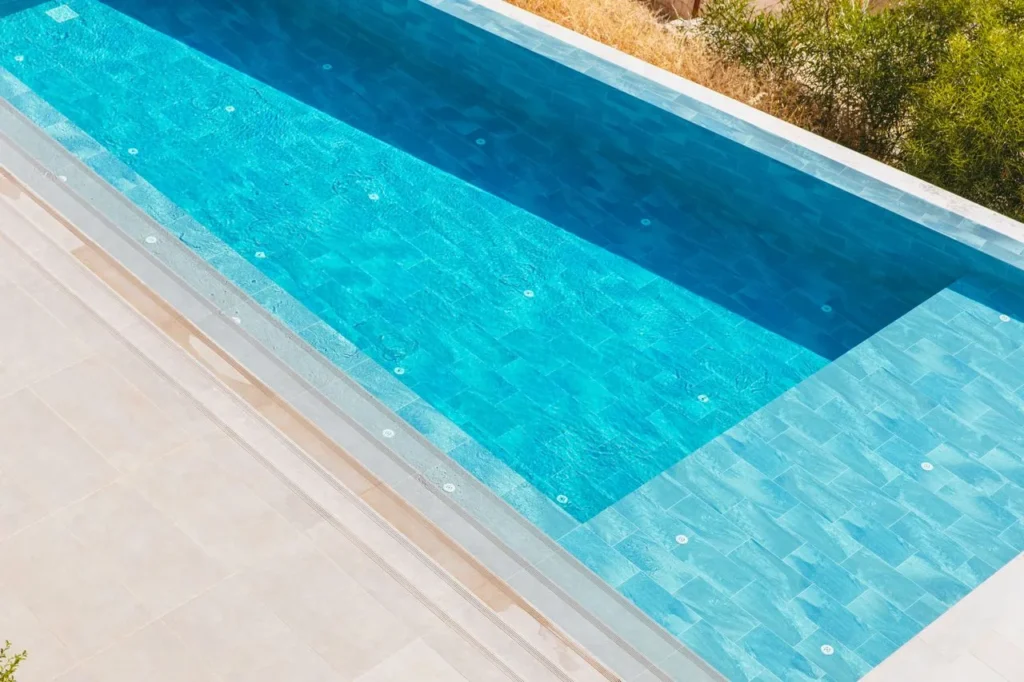
The waterline band is the most looked-at strip in the entire pool, and it is also where scum, sunscreen and body oils collect. This is the one place we tell people to spend properly. Aesthetics and durability point the same way here.
Classic blue glass mosaic is still the most requested option, and there is a reason it has lasted. Glass does not absorb water, does not react with chlorine, and holds its colour under UV far better than a glazed ceramic will. In a small 20×20 or 25×25 format, it also follows curves and step nosings without awkward cuts.
Iridescent mosaic is the other strong performer. The shimmer changes through the day as the sun moves, which gives a pool some life even when the water is dead still. It costs more and it shows installation errors more clearly, so it is worth paying for a tiler who has done it before. Tonal blends, where a single sheet carries three or four related shades, sit between the two and hide minor variation in the substrate. Each shade catches the light differently, which gives the band texture without any physical relief.
On band height, the default is one or two rows. A deeper band of300 mm or more has become popular and it is a practical decision as much as a decorative one, because a deeper band gives you room to move as the water level rises and falls through summer. It also hides the scum line better. Charcoal and black bands work well against a pale interior and give the pool a hard edge that reads as architectural.
Fully Tiled Pool Interiors And Glass Mosaics
A fully tiled interior is the premium option. It is also the only interior finish that does not need resurfacing on a ten to fifteen year cycle, which changes the maths over the life of the pool.
Full glass mosaics in a single deep colour give the most saturated result and the most reflective surface. Porcelain mosaics cost less, come in more stone and sand tones, and behave almost as well underwater, though the range is narrower and better suited to outdoor environments with heavy sun. Both need a genuinely flat shell underneath, because mosaic sheets follow every bump in the render.
Gradient work, where the tone shifts from pale in the shallow end to deep at the other, is one of the more effective pool design moves going around. It exaggerates the natural change in water colour with depth instead of fighting it. The catch is that it needs planning before the first sheet goes on, and it is difficult to fix if the set out drifts.
Feature panels are worth considering if a full interior is out of budget. A single mosaic wall on a blade wall, a spa, or the face of a raised beam gives you the impact without tiling the whole shell. We covered the technical side of this in our guide to mosaic tile installation Sydney wide, including why sheet alignment matters so much on curved work.
Pool Coping Tiles And The Edge Of The Pool
Coping does more work than any other part of the pool. It sheds water away from the shell, gives swimmers a handhold, protects the edge from impact, and takes more bare feet than any surface on the property.
Bullnose coping has the rounded edge most Australians picture, and it is comfortable to grab and to sit on. Drop face coping wraps down over the shell and gives a heavier, more solid look that suits contemporary builds. A square edge with a shadow line underneath is the sharpest of the three and the least forgiving of any settlement, because a level run of square coping shows every millimetre of movement.
The decision people agonise over is whether coping should match the surround or contrast with it. Matching gives you a seamless, cohesive run from the water to the house and a softer transition into the garden. Contrasting frames the pool as a distinct shape in the yard, which works especially well in a small courtyard where the pool needs a defined boundary. Neither is wrong. What matters is committing, because a near match that is not quite a match looks like an ordering mistake.
Travertine has been the most popular poolside coping in Sydney for years and looks close to timeless because it stays cool underfoot, grips well when wet, and its warmth suits both the sandstone and the planting in most eastern suburbs gardens. Our tiler Vaucluse crew installs more travertine pool coping than everything else combined.
Pool Tile Designs By Style
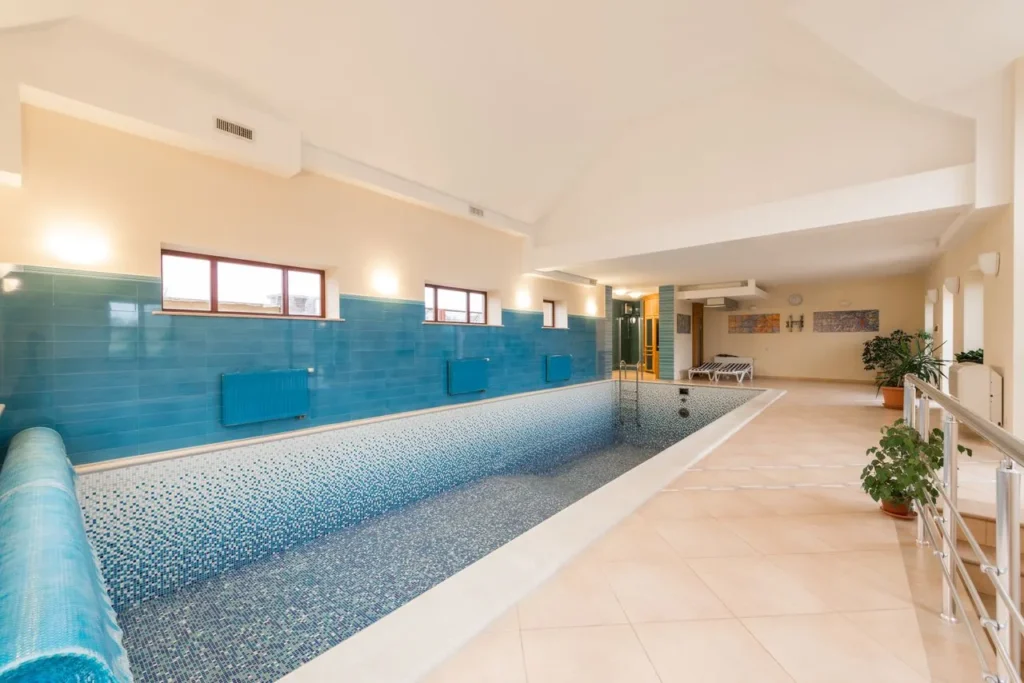
The minimalist pool
Grey or charcoal interior, square edge coping, a single large format paver running to the fence. The geometry does the work and there is nothing decorative at all. This suits a modern pool attached to a rendered or concrete house, where the aesthetic is carried by proportion instead of decoration. Keep the grout close to the tile colour or the joints become the pattern by accident.
The tropical pool
Deep blue or teal interior, travertine or sandstone surround, and planting brought right to the pool edge. That look relies on the surrounding landscape as much as the tiling, so it works best where there is enough garden to carry it. Mosaic in mixed blue tones gives more movement than a flat colour.
The coastal pool
Pale sand or white interior for that shallow lagoon look, light stone coping, and a low-contrast surround. Water over a pale interior reads ‘aqua’ and ‘turquoise’ rather than ‘deep blue’, which is the tranquil, swim up bar effect people are usually after. It shows leaves and debris more than a darker finish, so it needs a bit more skimming.
The luxurious dark pool
Black or graphite interior turning the water into a mirror plane that catches the sky and the house. Striking at dusk, with a reflective calm to it, warmer to swim in through the shoulder seasons, and harder to see the bottom of, which is worth thinking about with small children.
The style you pick should follow the house, not a picture you saved. A jungle scheme bolted onto a hard edged contemporary build looks confused, and so does a stark pared back scheme in a lush cottage garden.
Choosing Pool Tile Colour And What It Does To The Water
Tile colour does not colour the water. It changes what light bounces back up through it, and depth amplifies the effect, which is why the same tile looks pale in the shallow end and saturated at two metres.
Tile colour | Water reads as | Suits | Trade off |
White and pale sand | Pale aqua, light blue in the deep end | Coastal and courtyard pools | Shows leaves and debris |
Pale blue | Bright, clean, resort blue | Family pools, sunny yards | Can look artificial against natural stone |
Mid to deep blue | Classic deep blue | Most Australian backyards | The default, so it reads as safe |
Green and teal | Lagoon, works with planting | Tropical schemes, heavy greenery | Reads murky in a shaded yard |
Grey and graphite | Muted slate, strong reflection | Contemporary schemes | Warmer water in summer |
Black | Mirror finish | Architectural pools | Hard to see the bottom |
Depth matters more than the swatch, because every hue deepens as the water column grows. Ask your supplier for the deep end rendering, or better, look at a finished pool of similar depth rather than a sample tray. A tile that reads as a soft grey on the bench can turn almost black at 2.2 metres.
Surroundings matter nearly as much. A pool sitting against sandstone and established garden reads completely differently to the same tile against grey concrete and a rendered wall. Test the sample in the actual yard, wet, at midday and again in the shade of late afternoon. Ten minutes of that saves a lot of regret.
One practical note on darker choices. A dark interior absorbs more heat and lifts the water temperature slightly, which is welcome in October and less welcome in January. It also makes debris harder to spot on the floor of the pool.
What is the alternative to tiling a pool?
Tiling is not the right answer for every pool and every budget, and anyone who tells you otherwise is not being straight with you.
Interior finish | Typical lifespan | Feel underfoot | Relative cost |
Full tile or mosaic | 20 years plus | Smooth | Highest |
Pebble interior | 10 to 15 years | Rough, hard on feet | Mid |
Quartz interior | 10 to 15 years | Slightly textured | Mid |
Marble render | 7 to 12 years | Smooth, chalky | Lower |
Painted concrete | 3 to 7 years | Smooth | Lowest |
Fibreglass shell | 15 to 25 years | Very smooth | Fixed at build |
Pebble and quartz interiors are the volume choice in Australia for sound reasons. They are cheaper, they go in faster, and they hide minor shell imperfections that tile would expose. Their weakness is that they wear, they stain, and eventually they need resurfacing.
Where tile clearly wins is durability and appearance over time. A tiled interior looks the same at year fifteen as it did at year one, which nothing else on that list can claim. Where tiling is the wrong call is a pool with active structural movement, a very tight budget, or an owner planning to sell within two years. If your shell needs work before any finish goes on, that is a swimming pool renovations Sydney job rather than a tiling one, and it has to happen first.
How long does pool tiling last?
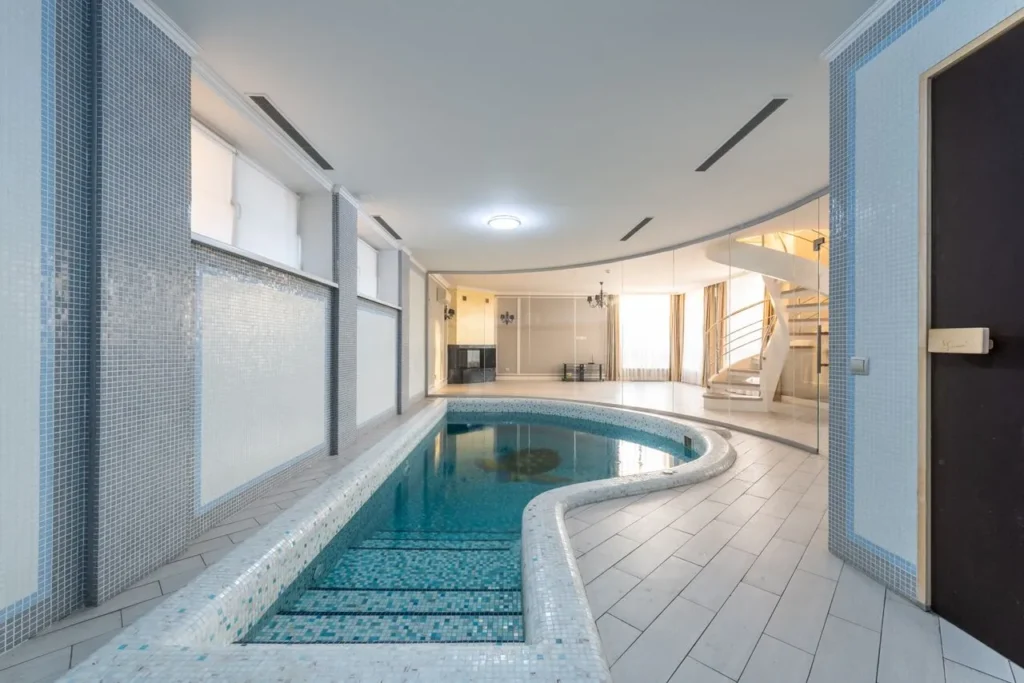
Properly installed pool tiling lasts twenty years or more, and the tile itself will often outlive the structure holding it. Mosaic in a well-maintained pool commonly reaches 15 to 25 years before it needs attention.
Here is the part worth understanding: tiles almost never fail. Grout, adhesive and waterproofing fail, and the tile falling off is the symptom. That reframes the whole conversation, because it means installation quality and material specification decide the lifespan far more than which tile you picked.
The usual causes are predictable.
- Adhesive not rated for permanent immersion.
- Cement grout used at the water level where epoxy belongs.
- Water chemistry left unbalanced because low pH attacks grout aggressively and most owners have no idea it is happening.
- Structural movement without adequate joints.
- And substrate preparation rushed to hit a deadline.
That last one is why we tell people to interview their tiler about preparation rather than about tiles. We wrote a full checklist on how to choose a pool tiler near me searches, and every question on it is about what happens before the first sheet goes on.
What Pool Tiling Costs In Australia
Scope | Typical range | Notes |
Waterline band tiling | From $180 per linear metre | Depends on band depth and pool shape |
Full interior mosaic | $150 to $400 plus per m2 | Glass at the upper end |
Coping supply and install | $120 to $350 per linear metre | Stone costs more than porcelain |
Surround tiling | $85 to $150 per m2 labour | Compliance adds to standard patio rates |
Tile supply, ceramic | $30 to $80 per m2 | Entry level |
Tile supply, glass mosaic | $80 to $200 plus per m2 | Origin and quality drive this |
Existing tile removal | $40 to $90 per m2 | Plus disposal |
Pool shape drives labour more than area does. A rectangular pool with square corners is quick. The same square meterage in a freeform pool with a beach entry, two steps and a curved spa can take twice as long, because every sheet needs cutting and every curve needs setting out by eye.
Format matters too. Smaller mosaic means more sheets, more alignment checks and more cutting. Access affects it as well, because a pool you can reach with a wheelbarrow costs less to tile than one behind a narrow side gate with twelve steps. Our tiler Mosman team deals with steep harbourside blocks constantly, and access is often the single biggest line item variable.
The cheapest way to tile a pool is a waterline band only, in a standard ceramic or entry level glass mosaic, on a pool that does not need draining or shell repair. What we would not do is save money on adhesive or grout. That is the false economy behind every failure listed in the section above.
Should you tile a pool yourself?
A competent DIYer with tiling experience can absolutely handle a surround or a deck on a sound, well drained slab. Plenty of people do, and they do it well.
Below the waterline is a different trade. Immersion rated waterproofing, epoxy grouting, and setting mosaic sheets so the joints stay true around a curve are specialist skills, and the cost of getting it wrong is draining the pool and starting again. The failures we get called to fix are almost always the same list: wrong adhesive, sheets set out of alignment so the joints wander visibly, grout haze left on glass, no movement joints, and membrane not lapped correctly at the coping junction.
There is also a compliance angle in NSW. Work on a pool interacts with pool safety certification, and unlicensed work can create problems at sale time that cost far more than the labour you saved. If you want the surround yourself and the shell done properly, that split is a reasonable plan, and any decent pool tiler Sydney side will quote it that way.
How Decore Tiling Plans a Pool Tiling Project
We assess before we recommend anything. Shell condition, existing substrate, water chemistry history, evidence of structural movement, and how the site drains. A pool that has been running at low pH for years needs a different grout specification to one that has been maintained properly, and you cannot tell that from a photograph.
Specification comes next and we write it down. Immersion-rated adhesive named on the quote. Epoxy at the water level as standard rather than an upgrade. The correct membrane system for the shell type. Movement joints are designed onto the plan instead of added when someone notices the problem.
Then samples, and this is the step most people skip. We get the tile on site, wet, in the actual light, before the order goes in. Where the budget allows, we lay a small trial area so the client sees the real colour at depth. It costs a day, and it has saved more than one client from a tile they would have hated by February. Everything else about our tiling services Sydney wide follows the same principle: decisions made with real information rather than a catalogue.
Bring your pool tiling ideas to life with Decore Tiling
The gap between a pool tiling idea and a finished pool sits almost entirely in the preparation, which is the part nobody photographs and the part most quotes are vague about.
We have been tiling pools across Sydney since 2004. That means honest advice about whether tile is even the right finish for your shell, materials specified in writing so you know what you are buying, and a crew who has set out mosaic around a curved spa before rather than working it out on your job. As tiling contractors Sydney homeowners keep coming back to, we would rather talk you out of the wrong choice than install it.
Start with a site visit. We look at the pool, talk through what you want it to look like, and give you a written scope with staged pricing so you can see exactly where the money goes.
- Licensed and insured, twenty years of Sydney pools
- Immersion-rated adhesives and grouts specified by name
- Samples reviewed on site, wet, before anything is ordered
- Movement joints and drainage planned, not improvised
- Staged pricing with no surprises after the quote
Frequently Asked Questions
What is the alternative to tiling a pool?
Pebble, quartz, marble render, paint, or a fibreglass shell. Pebble and quartz are the most common in Australia and cost considerably less than tiling, but all of them need resurfacing eventually. Tile is the only interior finish that does not degrade in appearance as it ages.
How long does pool tiling last?
Twenty years or more when installed correctly, and waterline mosaic often reaches twenty five. The tile is rarely what fails. Grout, adhesive and waterproofing fail first, which is why installation quality decides the real lifespan.
What is the best tile to put around a pool?
Textured porcelain pavers and honed travertine are the two strongest options for a surround, both specified at a minimum P4 slip rating. Lighter colours stay noticeably cooler underfoot, which matters in an Australian summer.
What is the best colour tile for a swimming pool?
Mid to deep blue gives the classic look, pale sand and white give a light aqua lagoon effect, and grey or black create a reflective, mirror like surface. Depth changes all of them, so always assess a sample against the deep end rather than a bench.
What is the cheapest way to tile a pool?
A waterline band only, in an entry level ceramic or glass mosaic, on a pool that does not need draining or shell repair. Keep the savings in the tile selection and never in the adhesive or grout.
Can you tile over an existing pool interior?
Sometimes, if the existing surface is sound, fully bonded and free of movement. More often the old finish has to come off so the membrane can be applied to a proper substrate. We assess it before quoting either way.
What grout is used for pool tiling?
Epoxy at the water level and throughout submerged areas. It resists pool chemicals, does not absorb water, and does not need sealing. Cement in a pool is a false economy that shows up within a few years.
How long does a pool need to be empty for tiling?
Usually one to three weeks depending on scope, drying times and weather. The shell needs to be genuinely dry before waterproofing goes on, and rushing that step causes most of the failures we get called to repair.
Can you tile a fibreglass pool?
Not the interior. Fibreglass flexes and tile does not, so the bond fails. Coping and surrounds around a fibreglass pool are tiled routinely, and a waterline effect can sometimes be achieved with a decorative band above the shell.
Do glass mosaic pool tiles fade?
Quality glass mosaic holds its colour for decades because the colour runs through the body rather than sitting on the surface. Cheaper glazed ceramic in a pool environment will fade under UV, which is the main reason we steer people toward glass in that band.