
Pool Coping and Tile Sydney
Decore Tiling supplies and installs pool coping and waterline tiles across Sydney. We work with travertine, sandstone, limestone, granite, bluestone and porcelain, and we’ve tiled pools since 2004.
Coping is the frame of your pool. It’s the edge you sit on, walk around and see from the house. Get it right and the whole pool looks finished. Get it wrong and it cracks, lifts, gets too hot underfoot or makes the pool look dated, no matter how good the tiles inside are.
- Licensed and insured
- Coping and pool tiling since 2004
- Supply and install, or install your stone
- Full-bed adhesive, correct falls and expansion joints
- Written workmanship warranty
- We reply to every enquiry within 24 hours
We’re the Sydney tiling contractors homeowners trust, with a dedicated team for pool tiling.
What Is Pool Coping?
Pool coping is the capping that runs around the top edge of a pool, sitting on the bond beam where the pool wall meets the surrounding paving. It does four jobs:
- Safety. A slip-resistant edge to sit on, walk on and hold onto.
- Water control. It directs splash and rain away from the pool and protects the bond beam.
- Structure. It covers and protects the top of the pool shell.
- Design. It frames the pool and ties it to the paving, house and garden.
Waterline tiles sit just below the coping, around the water level. Together, coping and waterline tiles form the band everyone sees first, which is why they work best when they’re planned together.
Not sure what your pool has now, or what would suit it? Ask us. It’s a quick conversation.
Signs Your Pool Coping Needs Replacing
Coping takes sun, rain, chlorine and foot traffic every day. These are the signs it’s failing:
- Cracked coping stones. Often from movement, poor bedding or stone that isn’t suited to the conditions.
- Lifting or rocking coping. The bond to the bond beam has failed.
- A hollow sound when tapped. The mortar or adhesive bed underneath has broken down.
- Gaps between the coping and paving. Missing or failed expansion joints.
- Stained, flaking or eroded stone. Soft or unsealed stone breaking down from salt and chemicals.
- Water running toward the pool. Coping laid without the correct fall.
- Trip hazards. Uneven stones where people walk barefoot.
A failing coping stone is more than a cosmetic problem. Water getting under the coping reaches the bond beam and the top of your pool tiles, which is often where waterline problems begin.
Pool Coping Materials Compared
Material | Look | Slip resistance | Heat underfoot | Salt resistance | Sealing |
Travertine | Warm, natural, classic | Good (tumbled or honed) | Stays cool | Good when sealed | Yes |
Sandstone | Natural, Sydney heritage feel | Good | Stays cool | Moderate (choose dense stone) | Yes |
Limestone | Soft, light, contemporary | Good when textured | Stays cool | Moderate | Yes |
Granite | Hard, modern, very durable | Good when flamed or exfoliated | Can warm in sun | Excellent | Optional |
Bluestone | Dark, architectural | Good when sawn or textured | Gets hot in sun | Very good | Yes |
Porcelain | Any look, consistent colour | Good (choose a pool-rated slip rating) | Depends on colour | Excellent | No |
Travertine
The most popular coping in Sydney. Light colours stay cool underfoot and suit almost any pool style.
Sandstone
A natural fit for Sydney homes, especially in older suburbs. Choose a dense grade for pools near the coast.
Limestone
Soft, light tones for contemporary pools. Needs sealing and a textured finish for grip.
Granite
Extremely hard-wearing and salt resistant. Ideal for coastal pools and high-traffic areas.
Bluestone
Striking and modern, but dark stone heats up in full sun. Best for shaded pools.
Porcelain
Low maintenance, no sealing and consistent colour. A great choice if you want a stone look without the upkeep.
See our natural stone tiling work for more on stone options.
Coping Edge Profiles: Bullnose, Square Edge and Drop Face
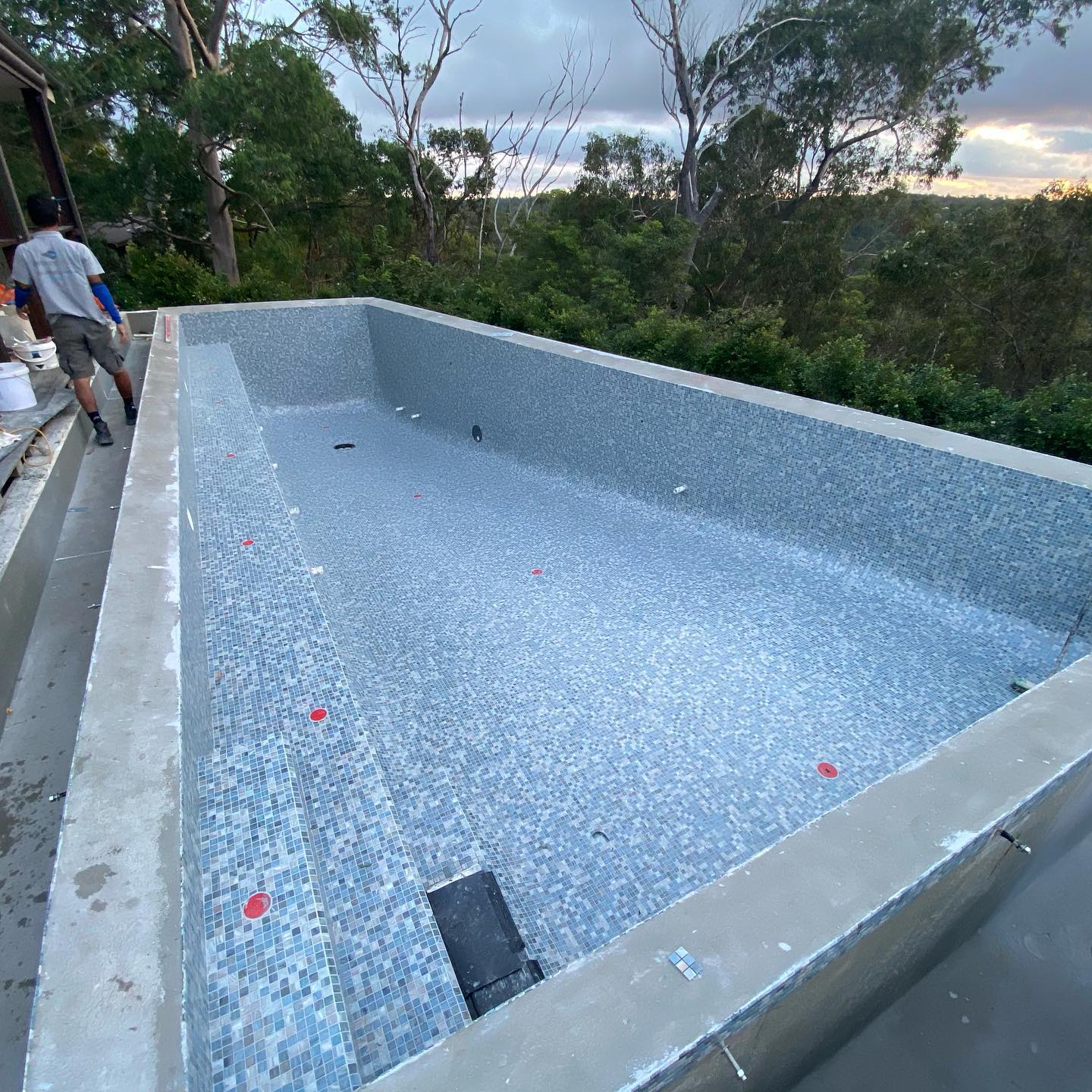
The edge profile changes how your pool looks and feels as much as the material does.
- Bullnose. A rounded front edge. Comfortable to sit on and a classic look for family pools.
- Square edge. Clean, sharp lines for modern and minimalist pools.
- Drop face. A thicker front face that drops down over the pool edge, giving a solid, chunky look. Popular on contemporary and resort-style pools.
- Rebated. A recessed edge that sits flush with the paving for a seamless look.
- Curved coping. Cut to follow kidney, freeform and curved pools.
For infinity and wet-edge pools, the edge detail is a technical job as much as a design choice, and needs precise levels.
Not sure which edge suits your pool? Send us a photo of your pool and house, and we’ll suggest options.
Matching Coping and Waterline Tiles
Coping and waterline tiles sit right next to each other, so they need to work as one design. This is where most pools either look considered or look pieced together.
- Blend. Light coping with soft-toned waterline tiles for a calm, resort feel.
- Contrast. Pale travertine with a deep blue or green glass mosaic waterline for a classic look.
- Tone on tone. Grey granite with a charcoal waterline for a modern, architectural pool.
- Consider the water colour. Waterline and interior tiles change how blue or green the water looks.
Doing both together also saves money and time: one drain, one crew and one schedule. See our glass mosaic tiling and pool tiling ideas for inspiration.
How We Install Pool Coping
Most coping failures come down to installation, not the stone. Here’s how we do it properly.
- Remove the old coping. Carefully, to avoid damaging the waterline tiles and paving.
- Inspect the bond beam. Cracks or damage are repaired before new coping goes on.
- Full-bed adhesive. Every stone is fully supported, with no dot-and-dab and no hollow pockets.
- Correct falls. Coping is laid to shed water away from the pool, not into it.
- Expansion joint. A flexible joint between the coping and paving to absorb movement.
- Grout and seal. Joints grouted, natural stone sealed to resist salt, chlorine and staining.
Why coping fails elsewhere: mortar beds that crack and let water in, no falls, and no expansion joint. We don’t skip those steps.
Slip Resistance and Pool Safety
Pool coping is walked on with wet, bare feet, so slip resistance matters. Choose coping with a slip rating suited to wet barefoot areas, and a textured finish such as tumbled, honed, sandblasted or flamed. Polished stone is not suitable around pools.
Heat underfoot matters too. Light-coloured stone like travertine and limestone stays cooler than dark stone in full sun.
Your pool barrier must stay compliant during coping works. Read the NSW Government rules for pool owners.
Looking After Your Coping
- Reseal natural stone every one to three years, depending on the stone and exposure.
- Rinse coping after heavy pool use and salt build-up.
- Avoid harsh acid cleaners, which can etch travertine, limestone and marble.
- Check expansion joints each year and replace any that have split.
- Fix rocking stones early, before water gets under the bond beam.
What Does Pool Coping and Tile Cost?
Coping is priced per job, because the stone, the edge profile, the length and the condition of the bond beam all change the work involved.
What affects the price:
- Material. Porcelain, travertine, sandstone, granite and bluestone all sit at different price points
- Edge profile. Drop face and custom edges cost more than standard bullnose
- Pool shape. Curves and freeform pools need more cutting
- Removing old coping
- Bond beam repairs
- Supply and install, or install only
- Doing waterline tiles at the same time. Often better value than two separate jobs
We assess on site and give you a fixed written quote. More in our pool tiling cost guide.
Supplying Your Own Coping?
No problem. We install client-supplied coping. Before you buy, check:
- Thickness and edge suit your pool and the existing paving height
- Slip rating is suitable for wet barefoot areas
- The stone suits pool water, especially near the coast or with a saltwater pool
- Quantity, with at least 10% extra for cuts and future repairs
Send us the product details before you order and we’ll check them for you.
Why Sydney Homeowners Choose Decore Tiling for Coping
- Installed to last. Full-bed adhesive, correct falls, expansion joints.
- Coping and waterline together. One drain, one crew, one design.
- Supply and install, or install only.
- Pool specialists since 2004.
- Written warranty.
Find out more about our team.
Upgrade the Frame of Your Pool
Tell us your suburb, your pool shape and any stone you like, and send a few photos. We’ll reply within 24 hours and arrange a free on-site assessment. Have loose waterline tiles too? See our pool tile repairs.
Prefer to talk first? Contact us.
FAQs
Pool Coping and Tile FAQs
What is the best stone for pool coping in Sydney?
Travertine is the most popular because it stays cool underfoot and suits most pools. Granite is best for coastal and saltwater pools. Porcelain suits owners who want low maintenance.
How much does pool coping cost?
It depends on the stone, edge profile, length and condition of the bond beam. We give you a fixed written quote after a free on-site assessment.
Can you replace coping without retiling the pool?
Yes. Coping can be replaced on its own. Many owners replace the waterline tiles at the same time, since both sit together and it saves a second job.
Do I need to drain the pool to replace coping?
Usually the water level only needs to be lowered below the work area. If waterline tiles are also being replaced, the water comes down further.
What's the difference between bullnose and drop face coping?
Bullnose has a rounded front edge for a classic look. Drop face has a thicker front face that drops over the pool edge for a solid, modern look.
Should coping match the waterline tiles?
They should work together, either by blending or contrasting deliberately. Planning both together gives the best result.
Can you install coping I've bought myself?
Yes. Send us the product details before you order and we’ll check the stone, thickness, edge and slip rating are right for your pool.
Does natural stone coping need sealing?
Yes, most natural stone should be sealed to resist salt, chlorine and staining, and resealed periodically. Porcelain doesn’t need sealing.
Why does pool coping crack or lift?
Usually poor bedding (mortar or dot-and-dab adhesive), no fall away from the pool, missing expansion joints or stone that isn’t suited to pool conditions.